
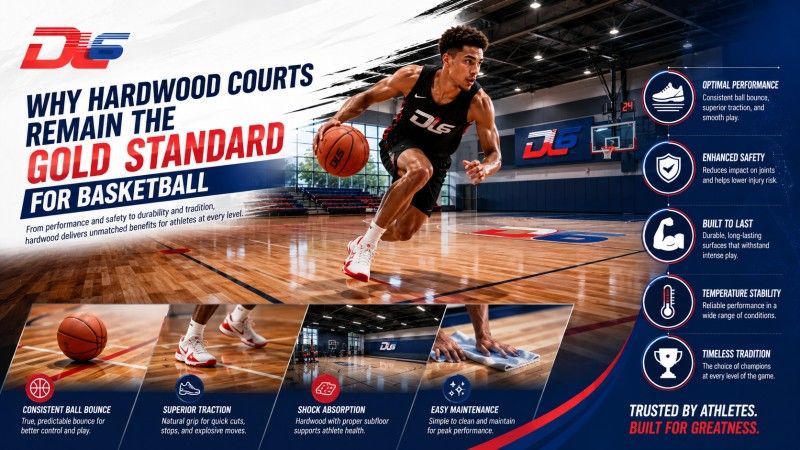
Basketball feels different on a hardwood court. Players notice it during the first sprint, the first crossover, and the first jump shot. Movement stays smooth, traction feels balanced, and every bounce sounds crisp. Those details shape the way athletes train, compete, and improve over time. That experience explains why hardwood basketball courts continue to lead competitive and recreational spaces alike.
Professional leagues, training centers, schools, and community facilities continue to choose hardwood surfaces because they support performance while reducing unnecessary strain on athletes. A quality court does more than create a polished look. It supports safer movement, predictable ball response, and a better playing atmosphere.
As indoor sports continue to grow, many modern sports complexes also support activities beyond basketball. Facilities that host volleyball, training programs, and even indoor pickleball in Greenville SC often rely on premium indoor flooring systems because athletes expect consistency across every game and workout.
Consistency Shapes Better Basketball
Every basketball player depends on rhythm. Footwork, dribbling, passing, and shooting all rely on timing and control. Hardwood courts provide a predictable surface that helps athletes maintain consistency during every movement.
When a player drives toward the basket, court traction needs to remain stable. Slippery or uneven surfaces interrupt movement patterns and create hesitation. Hardwood surfaces support smoother transitions between movements, helping athletes react naturally during competition.
That reliable performance explains why coaches continue recommending hardwood basketball courts for serious training sessions. Athletes benefit from a surface that responds the same way every day.
Basketball also depends heavily on ball bounce. Hardwood flooring creates dependable rebound response across the entire court. Players sharpen dribbling skills faster when the surface remains uniform from sideline to sideline.
Player Safety Always Matters
Injury prevention remains one of the biggest reasons facilities continue investing in hardwood courts. Basketball involves quick cuts, rapid stops, jumping, and repeated impact on knees and ankles. Poor flooring increases stress on joints and muscles.
Hardwood systems absorb impact more effectively than many harder recreational surfaces. That shock absorption supports long practices and tournament play without creating excessive strain on athletes.
Parents, coaches, and trainers continue prioritizing safer playing environments because young athletes spend hours practicing every week. Facilities that maintain high quality hardwood basketball courts create a more dependable environment for player development.
Indoor sports complexes now support multiple athletic communities under one roof. Players training for basketball may share space with volleyball athletes or participants enjoying indoor pickleball in Greenville SC. Multi sport environments benefit from flooring systems designed for durability and athlete comfort.
Hardwood Courts Support Faster Gameplay
Basketball continues evolving into a faster sport. Modern players move with speed, spacing, and rapid decision making. Court surfaces need to support that pace without limiting movement.
Hardwood flooring allows athletes to accelerate and stop efficiently. Players gain confidence when they trust the floor beneath them. That confidence improves reaction time and encourages aggressive yet controlled play.
Fast paced games also create more excitement for spectators. Hardwood courts enhance sound quality inside gyms, making every dribble, pass, and defensive stop feel more intense. The atmosphere becomes part of the experience.
Competitive athletes often prefer hardwood basketball courts because they mirror the surfaces used at advanced levels of play. Practicing on similar flooring prepares athletes mentally and physically for tournament environments.
Durability Makes Hardwood a Smart Long Term Choice
A well maintained hardwood court lasts for years while continuing to deliver strong performance. Facility owners value that long term reliability because indoor sports spaces experience constant activity.
Training sessions, youth leagues, camps, tournaments, and community programs place heavy demands on flooring systems. Hardwood courts withstand repeated use while maintaining visual appeal and functional performance.
Maintenance also remains relatively manageable when facilities follow regular cleaning and refinishing schedules. Surface care helps preserve traction and appearance without requiring complete replacement.
Many modern athletic centers now serve multiple recreational audiences. Visitors attending basketball training may also explore arcade spaces, fitness areas, or indoor pickleball in Greenville SC programs inside the same facility. Durable flooring helps support those expanding recreational demands.
Athletes Connect Emotionally With Hardwood Courts
Basketball culture carries deep emotional connections. Players often remember the sound of sneakers on polished wood floors long after games end. Hardwood courts create an atmosphere that feels authentic to the sport.
Televised games, championship tournaments, and historic basketball moments almost always happen on hardwood. That connection shapes player expectations from a young age.
Walking into a gym with polished wood flooring immediately creates a stronger sense of competition and focus. Athletes often train harder when the environment feels professional.
Facilities featuring hardwood basketball courts also attract tournaments and larger events because organizers recognize the importance of quality playing conditions. Better facilities often create better athlete experiences.
Community sports environments continue expanding as families seek year round activities indoors. Alongside basketball programming, facilities supporting indoor pickleball in Greenville SC continue attracting players looking for reliable indoor recreation options.
Hardwood Enhances Training Quality
Training quality depends heavily on environment. Athletes improve faster when facilities provide dependable conditions for skill development.
Hardwood courts help trainers teach proper movement mechanics because the flooring responds consistently during drills. Players learn balance, defensive positioning, and controlled footwork more effectively on stable surfaces.
Strength and conditioning programs also benefit from reliable court environments. Athletes moving between agility drills and basketball specific exercises need flooring that supports explosive movement safely.
Youth athletes especially benefit from proper surfaces during developmental years. Repetitive movement on low quality flooring may create unnecessary stress over time. Hardwood reduces that concern while supporting better movement habits.
As indoor athletic facilities continue evolving, operators increasingly combine basketball spaces with recreational offerings such as batting cages, turf training, and indoor pickleball in Greenville SC activities. Flexible indoor environments create stronger community engagement throughout the year.
Professional Appearance Matters Too
Visual presentation influences athlete confidence and visitor impressions. Hardwood courts create a clean and polished appearance that elevates the entire sports environment.
Families attending games often associate hardwood flooring with professionalism and organization. Athletes feel motivated when they compete in spaces designed with care and attention to detail.
Lighting also reflects more naturally on polished hardwood surfaces, improving visibility during games and practices. Spectators enjoy a better viewing experience while athletes maintain stronger court awareness.
Many facilities continue investing in hardwood basketball courts because appearance contributes directly to reputation. Players and families often return to spaces that feel organized, safe, and professionally maintained.
Indoor sports participation continues rising across different age groups. Recreational programs such as indoor pickleball in Greenville SC demonstrate how communities increasingly value accessible indoor athletic spaces for year round activity.
Hardwood Courts Create Versatile Athletic Spaces
Modern sports facilities rarely focus on a single activity. Communities now expect flexible indoor environments capable of supporting leagues, camps, training sessions, and recreational events.
Hardwood courts support that versatility extremely well. Basketball remains the primary use in many facilities, though volleyball, fitness programs, youth clinics, and other indoor activities also benefit from quality wood flooring.
Tournament organizers often prefer hardwood facilities because they create better experiences for athletes and spectators alike. Reliable flooring reduces disruptions and helps games run smoothly throughout long event weekends.
Facilities supporting both hardwood basketball and recreational activities continue attracting broader audiences because families appreciate convenience and variety under one roof.
Indoor recreation trends also continue shifting toward climate controlled experiences. Athletes and families increasingly choose indoor environments that support comfortable play regardless of weather conditions.
Conclusion
Hardwood courts continue leading basketball environments because they combine performance, safety, durability, and tradition in a way few surfaces match. Players trust the movement, coaches value the consistency, and facilities appreciate the long term reliability.
As sports facilities continue evolving into multi use community spaces, premium indoor flooring remains a critical part of athlete experience. Basketball players, trainers, and recreational athletes all benefit from environments designed around comfort and performance.
Whether someone trains for competitive leagues or enjoys recreational indoor activities such as indoor pickleball in Greenville SC, indoor sports environments thrive when facilities invest in quality surfaces. That lasting value explains why hardwood basketball courts continue setting the standard for the game.